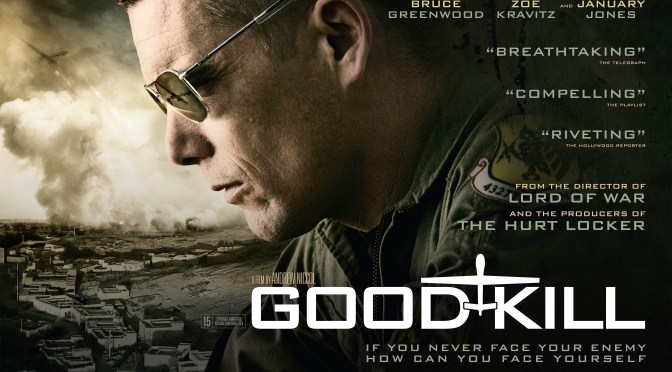
Excerpt: Good Kill is an engaging and impressively persuasive film dealing with the (dystopian) future of warfare. The approach has a slight banality to it from having been previously bombarded with the same messages and cautionary tales in previous films about war. Thanks to great performances from Hawke, Jones and Kravitz, the messages in this film prove to be worth repeating.
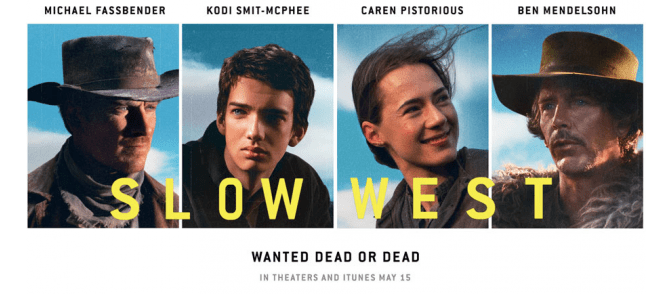
Excerpt: Slow West reminds us that nothing is as simple as black and white. Sometimes things are sepia-toned, but more often they are vibrantly colored, regardless of whether it’s something that will bring you joy or inevitably cause your death. First timer John Maclean shows us he can weave and tell a story like he’s been doing it for years. Slow West is not lethargic, but deliberately paced around the apologue it is constructing and deconstructing.
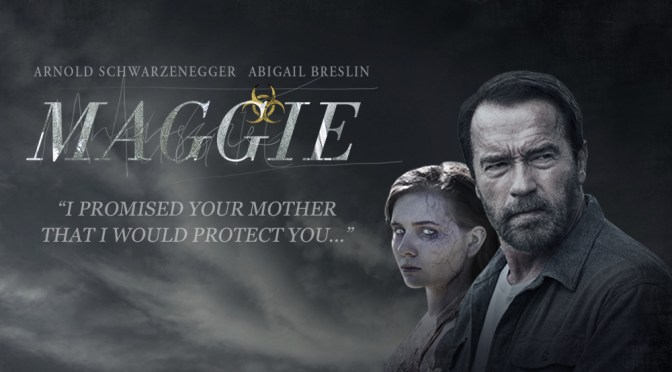
Excerpt: In the dreary darkness of Maggie, we see a warming, tender light in the story of a father and daughter living in the dark days after a viral outbreak. The film’s pace may prove too slow for fans of the violent, dismembering, undead hordes, but the film is a great addition to the overall zombie canon. Schwarzenegger’s endearing and powerful performance will give you a change of heart on not only this film, but also when considering Schwarzenegger’s artistic range. The film may all have to do about dying and coping with death, but from it, I can see refreshing new life being breathed into Schwarzenegger’s career. He famously said he’d be back, but I didn’t believe him until now.
Excerpt: Like the character of Alice in Welcome to Me, this film is also rich, but in a beautiful, flawed sense. The character is daring and eccentric, but never verging on caricature, and that is all thanks to the very specific skill set Wiig brings to every film. The film is all about the search for understanding (and being understood) and trying to figure out a person’s place in the world, but it is undeniable that this film should have found a place in your life, and that is on your screen (in a movie theater or on your computer screen for video on demand).
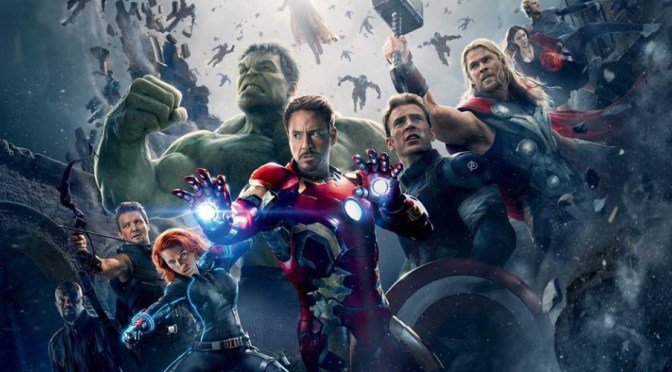
Excerpt: There is something to be said about how well synergized the Marvel on-screen universe is. The film opens mid assault on a base holding the Loki’s scepter (among other surprises). How they got their information or location to this is for the most part unimportant, and you quickly realize this after a few minutes into the film, there is a staged freeze frame that reminds you of comic book cover art. It is cheesy and completely over the top for a film, but it is a staple when for comic books, so it feels essential. Other essential things include the dynamic colors and costumes, comedic overtones and one-liners, and hordes of enemies and explosions. One major pitfall that is unavoidable when it comes to any film with fantasy and technologically advanced elements is the massive amounts of CGI needed to bring the universe alive. The first Avengers was a completely new cinematic experience, bringing together a huge ensemble of superheroes, each with their own backstories from their own respective world’s, and having them build up to this one explosive collaboration. That was the first Avengers. Lightning rarely strikes twice (unless you’re Thor), and Avengers: Age of Ultron proves that.
Excerpt: The film is full of strained sweet moments and tactless tenderness. The crisp, vibrancy of the cinematography gives the film less of a humble Leave It To Beaver feel and more of comic book universe tint. It makes the film nice to look at, but without a competent story, you’re better off looking at a still life. With perhaps the exception of Kevin James (who plays the city’s doctor), the rest of the cast does an adequate job at their roles. Jakob is able to play up Pepper’s adorable, childlike naiveté to completion, but any good impressions he may have made are squandered when the film ties in his nickname to the atomic bomb dropped on Hiroshima, and everyone in the film praises him for that coincidence. Also, it might just be a 1940’s cultural disconnect, or the term no longer has any negative meaning for my generation, but any dramatic effect that was supposed to be created when all the other children call Pepper “little boy” falls completely flat. Why? Because he is, in fact, a little boy like all the other little boys calling him that.
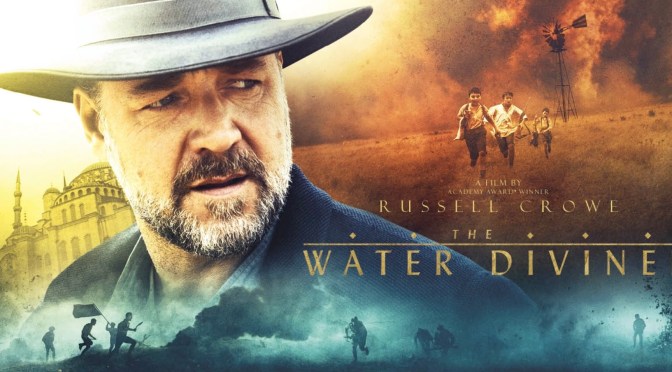
Excerpt: The story might be about war, but the true battle pits Russell Crowe “the actor” against Russell Crowe “the director”. Russell Crowe, the actor, we know too well. He is always a powerful presence and delivers a strong, scene-stealing performance, even if he is forced to sing (not in this film though). Crowe, the actor, is one of the few assets The Water Diviner, and it uses his tender/tough guy persona and signature pensive-stare-into-oblivion gaze. Russell Crowe the director is new to the scene, but you can tell he has picked up some cinematic tricks from his acting alter ego. Unfortunately, all of the techniques he employed have been overused–even in films he’s starred in, but some techniques were just completely misused.
Excerpt: The only reason that I can attribute this film’s cinematic failure to is that perhaps it was a little too true for it’s own good. Normally I would applaud this, but sticking to the exact sequence of events was a great detriment to this film. The potentially great performances by the cast remained untapped because the story’s narrative never rose to the emotional heights that the subject matter demanded. Usually, when murder (especially multiple child murders) is involved in court cases, people are the opposite of placid. The mostly even-tempered nature of the characters seemed out of place for everyone except Franco, whose character called for it, being a sociopath and all.
Excerpt: Unfriended uses its subtle development of suspense to create genuine, well-earned scares, even if there are only a few. As a byproduct, this film serves as an effective anti-bullying PSA and as a means to connect with most of the audience through the use of all of the popular social media outlets. All except Twitter, but that is probably because ghosts aren’t fond of the 140 character limit.
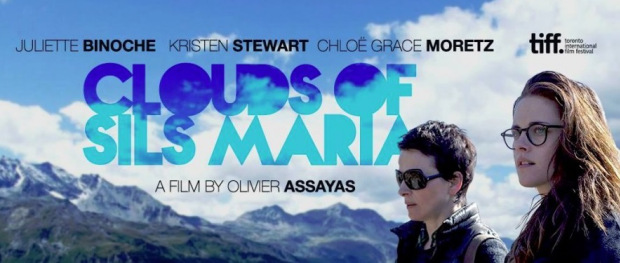
Excerpt: We don’t always notice the specific changes we go through, whether they’re physical, emotional, or even metaphysical. Cloud of Sils Maria takes a look at all of the past stages of Maria’s life, like ghosts coming back to haunt her on the eve of her transition. This metatheater film uses beautiful, natural scenery to parallel how natural change is, even if you try to rage against it. With inspired performances for three powerhouse females, this film shows us that no matter at what age, a great performance is timeless.




 Still To Be Scene